
Volunteering can take many forms for young children. It does not always look like formal service projects or organised initiatives. Sometimes, it begins with helping to wash vegetables, sorting food for others, or growing a small plant at home.
For Elizabeth, these small acts became the starting point of a longer journey, one that gradually connected sustainability, responsibility, and science.
2018: Learning That Food Connects People
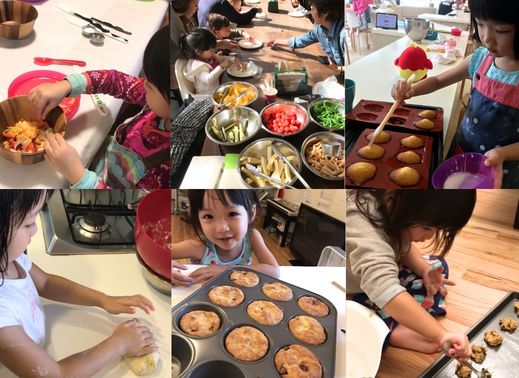
At four years old, Elizabeth had developed a strong interest in cooking. She enjoyed helping in the kitchen, asking questions about ingredients, and pretending to host her own “restaurant” at home
In September 2018, our family participated in Kampung Picnic at URA’s PARK(ing) Day. The event focused on food ecosystems, composting, and sustainability. Elizabeth helped to wash and prepare vegetables for cooking, and the food was served and shared with the community.
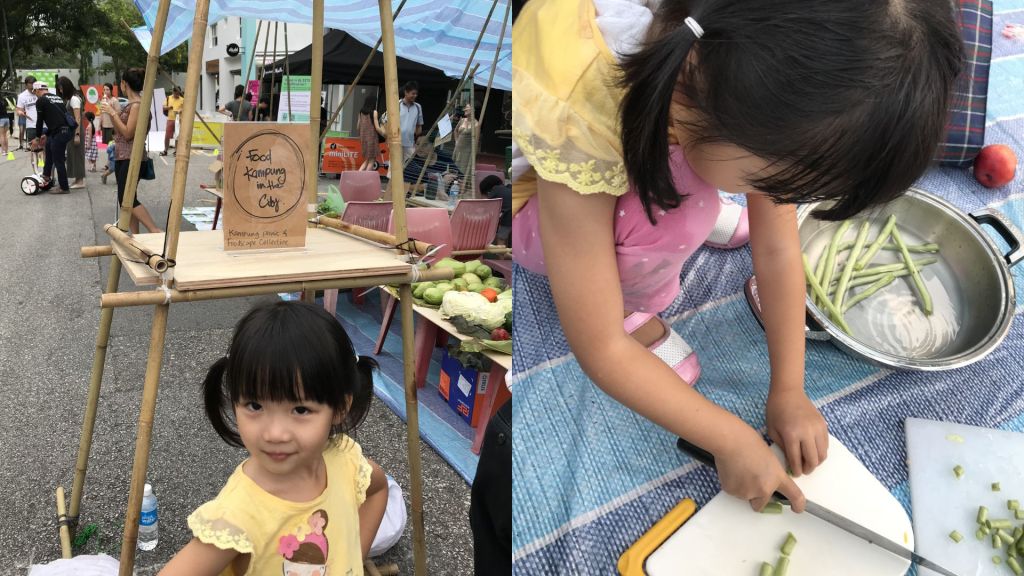
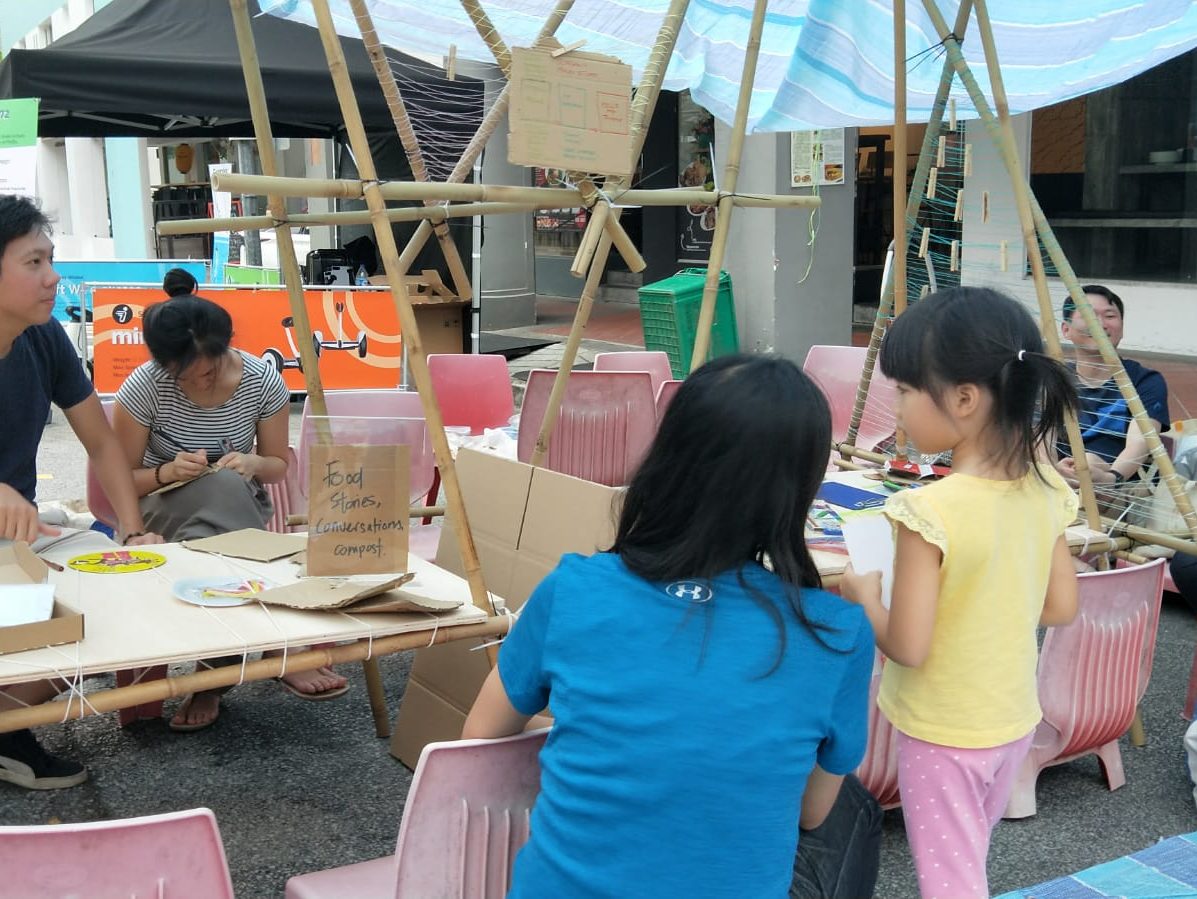
She also observed composting demonstrations and conversations about food waste. Although she was young, she began to notice that food scraps were not simply discarded. They could be returned to the soil. Waste could become resource.
For her, food slowly shifted from being just something to cook and eat, to something connected to responsibility. At that age, volunteering meant participating and observing.
2018: Reducing Waste Through Action
The following month, she joined a Vegetable Rescue activity organised by SG Food Rescue.
Unsold vegetables that would otherwise have been discarded were collected by volunteers. Elizabeth sorted, cleaned, and packed them. She carefully removed the sprouted parts of red onions before placing them into bags.
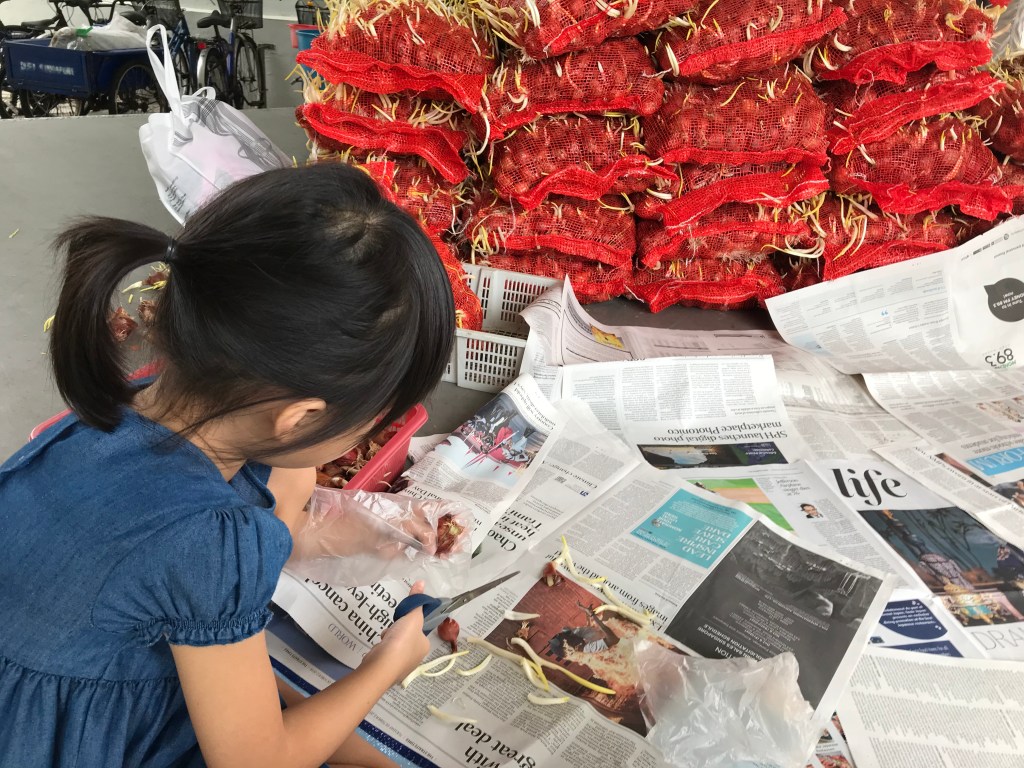
The vegetables were then placed at a community food corner for residents to collect.
Here, volunteering became practical and tangible. Sustainability was no longer just something she saw. It was something she contributed to.
2020: From Sustainability to the Science of Growing Food
By 2020, the children’s interest had shifted. They were no longer only curious about food sustainability as a social issue. They wanted to understand the science behind growing food.
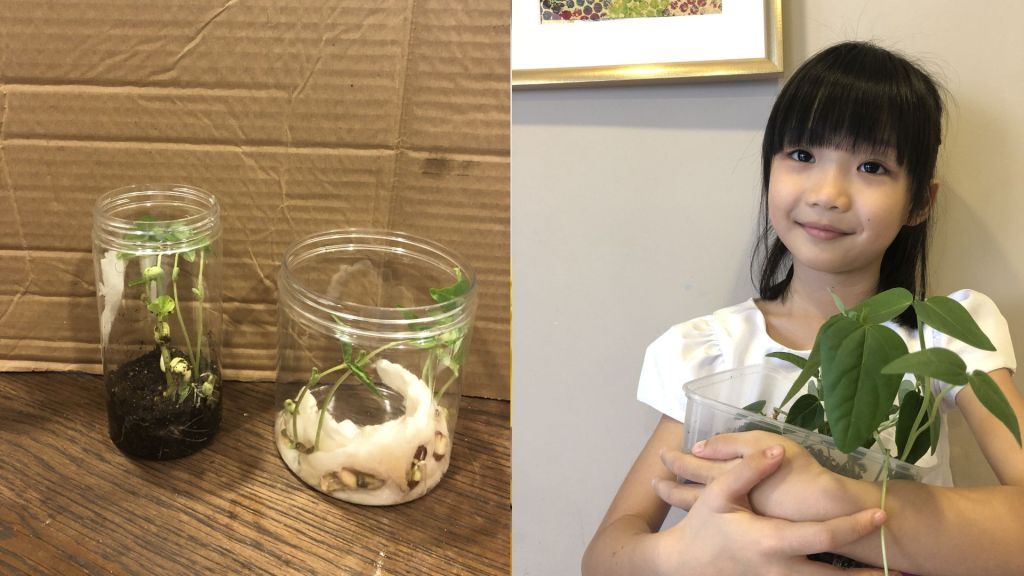
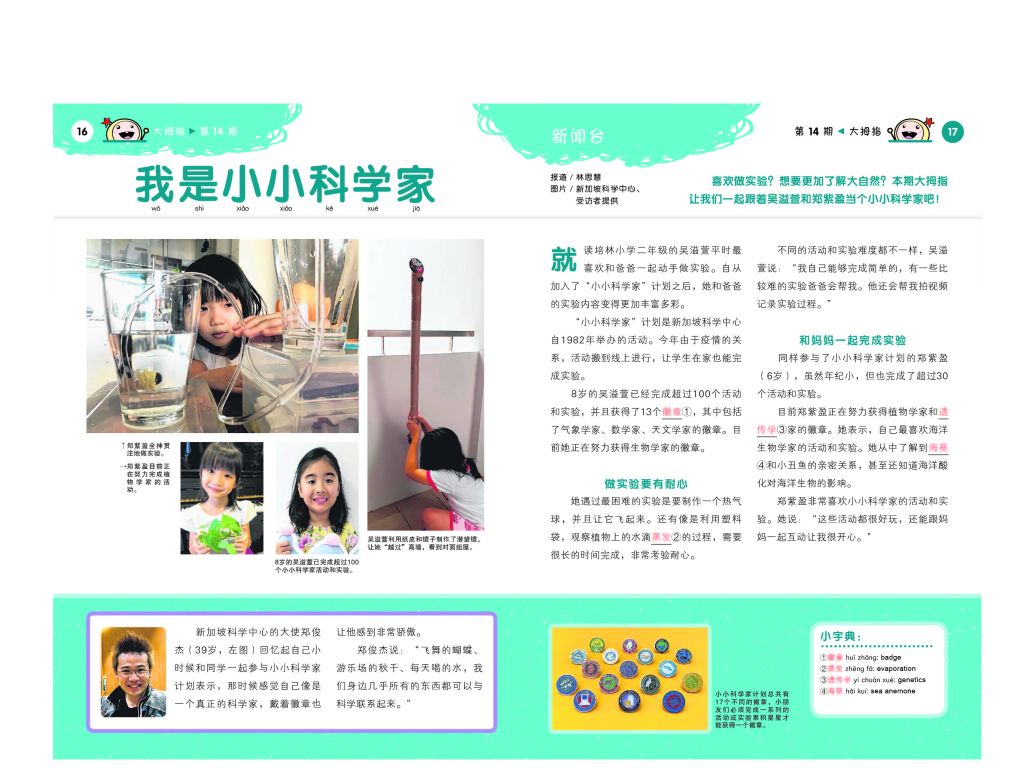
We visited the Science Centre, and Elizabeth took part in the Young Scientist Programme, completing the Young Botanist badge. One of the activities involved growing beans.
After completing the badge, Elizabeth and Benjamin continued planting vegetables at our tiny balcony. Small bean seedlings grew into tall stalks that produced more beans over time. They harvested the beans and used them to prepare simple meals at home. They also continued growing chilli plants and caring for what they planted.
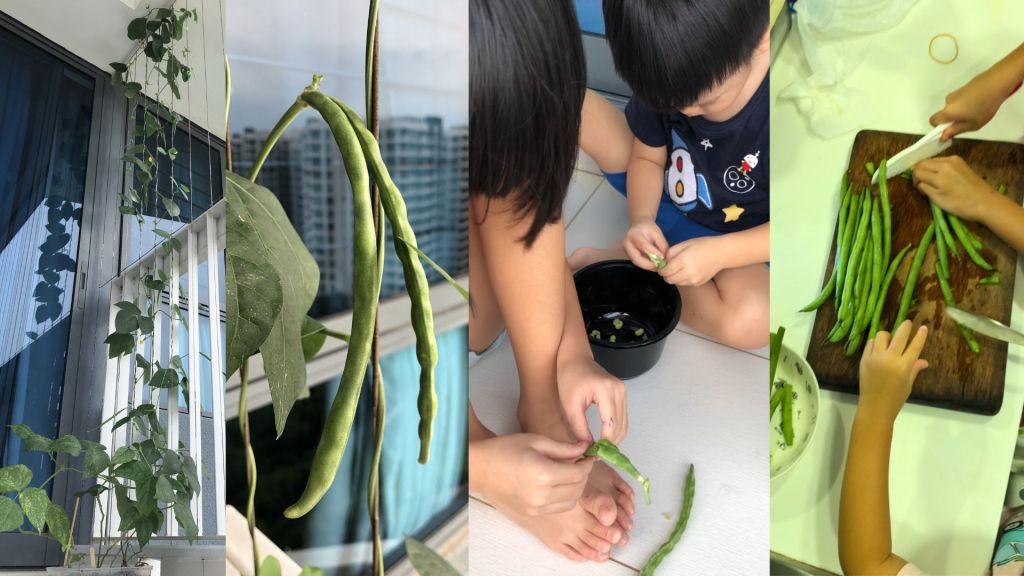
Sustainability became daily practice. Growing food required observation, patience, and consistency. It naturally deepened their curiosity about how living systems function.
Volunteering had evolved into scientific inquiry.
2021: Applying Science to Address a Sustainability Gap
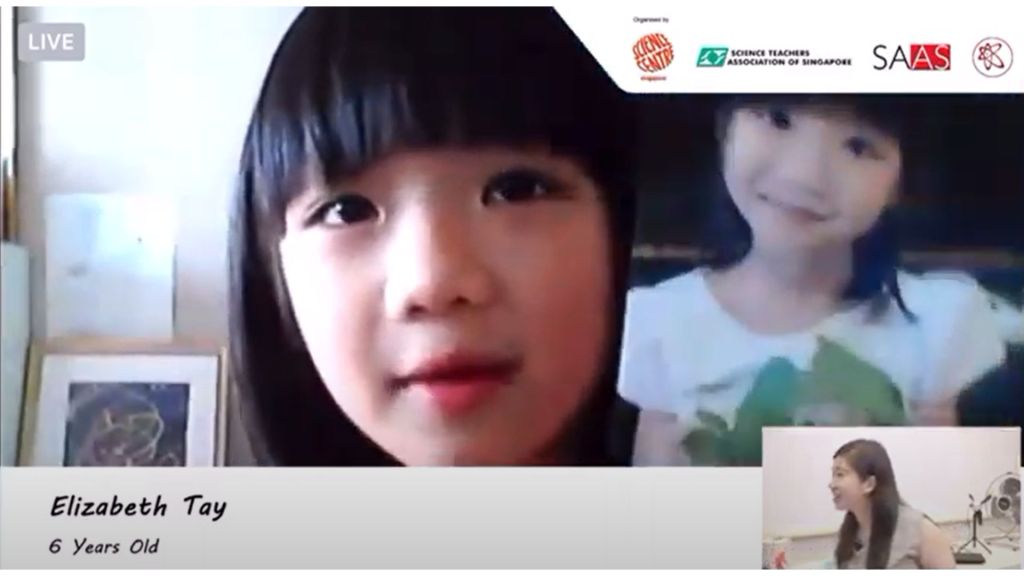
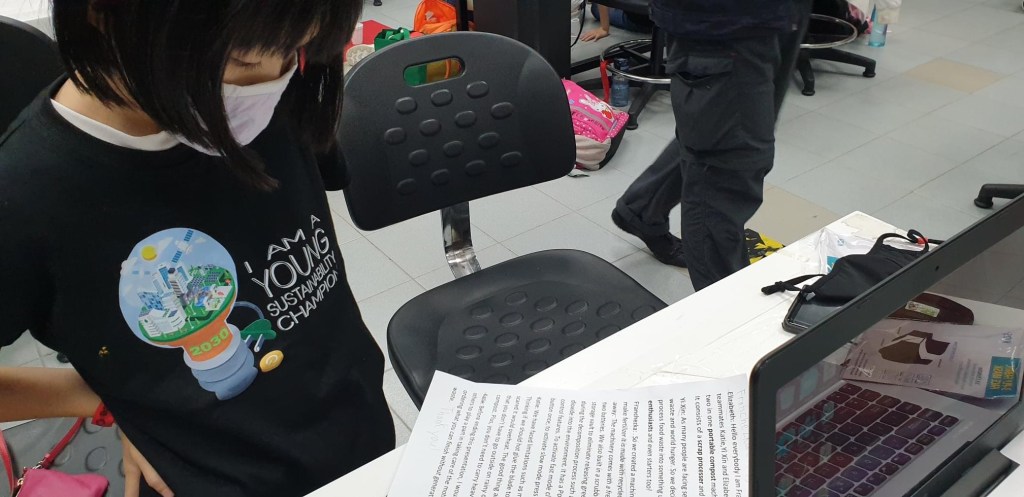
At seven years old, Elizabeth was selected as the youngest participant in the Young Sustainability Champion Prototyping & Mentorship Programme.
By then, her passion for science had strengthened considerably. She was increasingly interested in biological processes, experimentation, and understanding how systems functioned.
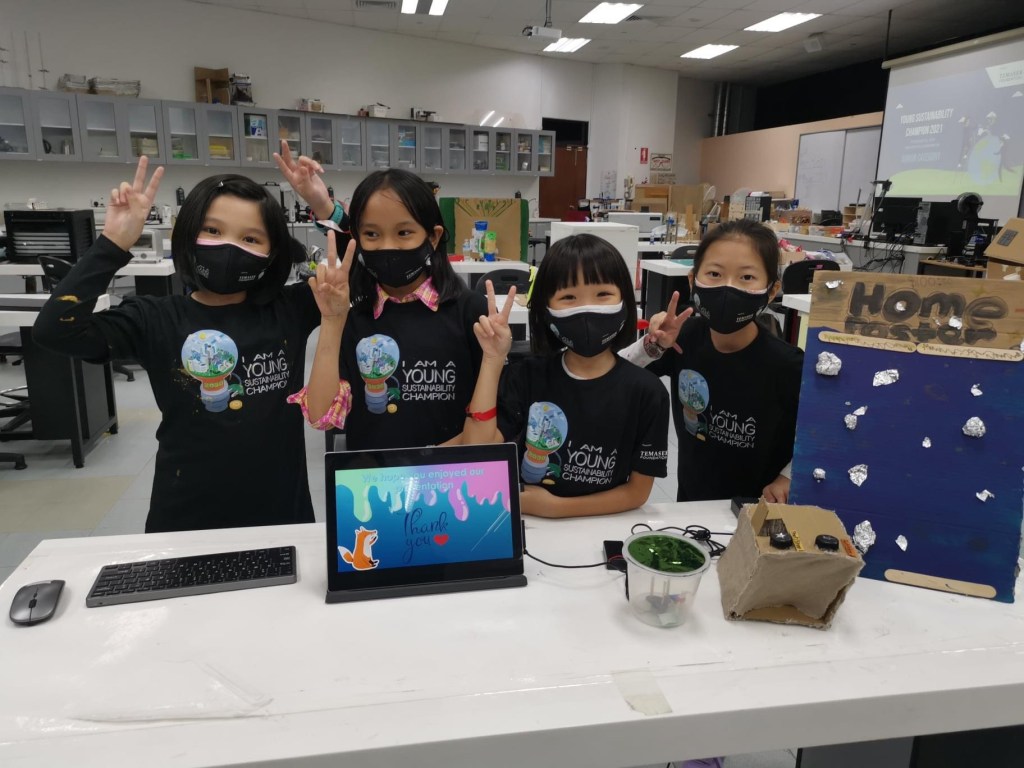
During the programme, her team identified a gap: although households generate food scraps daily, composting adoption in urban environments remains low due to inconvenience and space constraints.
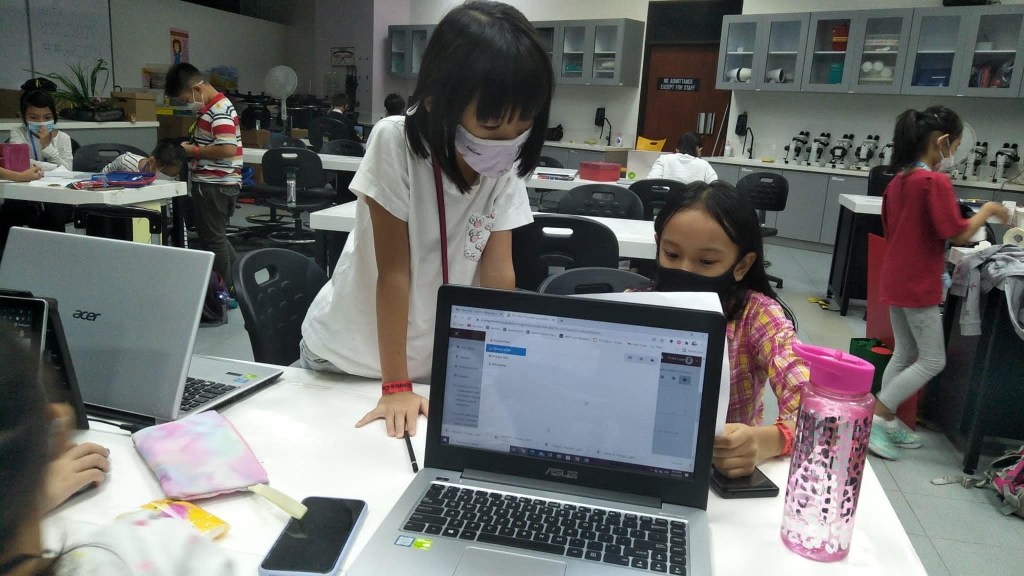
The journey that began with washing vegetables and sorting rescued produce now moved into systems thinking.
Her team designed a concept called Home-poster, a smart composting solution aimed at making food waste conversion more accessible for families.
Helping out at community events slowly shaped her ability to notice inefficiencies. Noticing those gaps eventually led to designing ways to improve them.
Small Acts, Growing Impact
Looking back, each experience seemed small on its own: Helping to wash vegetables, sorting unsold produce, and
growing beans on a balcony.
But together, they formed a progression.
Volunteering built responsibility.
Responsibility sparked curiosity.
Curiosity led to science.
Science enabled changemaking.
For young children, volunteering does not have to be grand. Sometimes, it begins with small hands doing small tasks, and those small tasks quietly shape how they see problems, systems, and possibilities.
Volunteering can mean:
- Improving how resources are used
- Designing solutions to environmental gaps
- Applying science to practical sustainability challenges
- Working collaboratively to create long-term impact
This perspective shaped why Elizabeth and Benjamin started SmolBoss. They wanted to bring together like-minded children who believe that one person cannot do everything, but together they can create bigger impact.
Exposure Matters
As parents, our role is not to decide what our children will become. It is to expose them to different opportunities, even at a young age.
We never know what one experience will lead to. But we do know that exposure builds awareness, and awareness can grow into responsibility.
Volunteering, in many forms, begins with noticing.
 Smol Boss
Leave a comment