
When Elizabeth was just 3 years old, we had our very first experience with volunteering. At that time, we were living in Manhattan and part of a small homeschool group. Twice a week, a few parents and children would meet up for lessons, playdates, and sometimes—special outings. One of those outings became a memory that would shape how I think about children, volunteering, and meaningful intergenerational connections.
A parent in the group had organised a visit to a local nursing home. It sounded simple enough, though I’ll admit, I was a little unsure. We had never been to a nursing home before. I didn’t know what to expect, and honestly, I wasn’t sure if bringing a toddler was even appropriate. But when I asked the organiser what we needed to prepare, she simply said, “Just come.”
So we went.
The Awkward First Visit
Before the visit, I tried to explain to Elizabeth what a nursing home was and who we were going to meet. But at three, I don’t think she truly understood. Concepts like “visiting seniors to cheer them up” are still too abstract at that age.
When we arrived, the environment was warm and welcoming. The seniors were excited to see the children. But very quickly, it became obvious that none of us had a clear idea of what to do next. The children—preschoolers, barely out of toddlerhood—were shy and awkward. They didn’t know how to start a conversation. The seniors, though kind, found it hard to connect when there was nothing structured for them to do together.

Someone brought out board games, but the rules were far too complicated for the little ones. The atmosphere became… well, awkward. The children fidgeted. The seniors smiled kindly but didn’t know how to engage them. We parents stood on the sidelines, exchanging helpless looks, wondering how we could bridge this gap.
On the way home, I kept thinking:
Should I have prepared Elizabeth better?
Should I have brought simple crafts that both kids and seniors could do together?
What could I, as a parent, have done differently?
That day taught me a valuable lesson: for very young children, it’s not enough to explain the cause or intention. They need an activity that’s age-appropriate and fun first. The meaningful connections will follow from that shared experience.
A Few Months Later: A Positive Turn with Chocolate Packing
A few months after that awkward nursing home visit, I came across another volunteering opportunity through a church friend. This time, it was to pack chocolate goodie bags for children in need. The event was taking place in Long Island, which meant a two-hour journey each way.
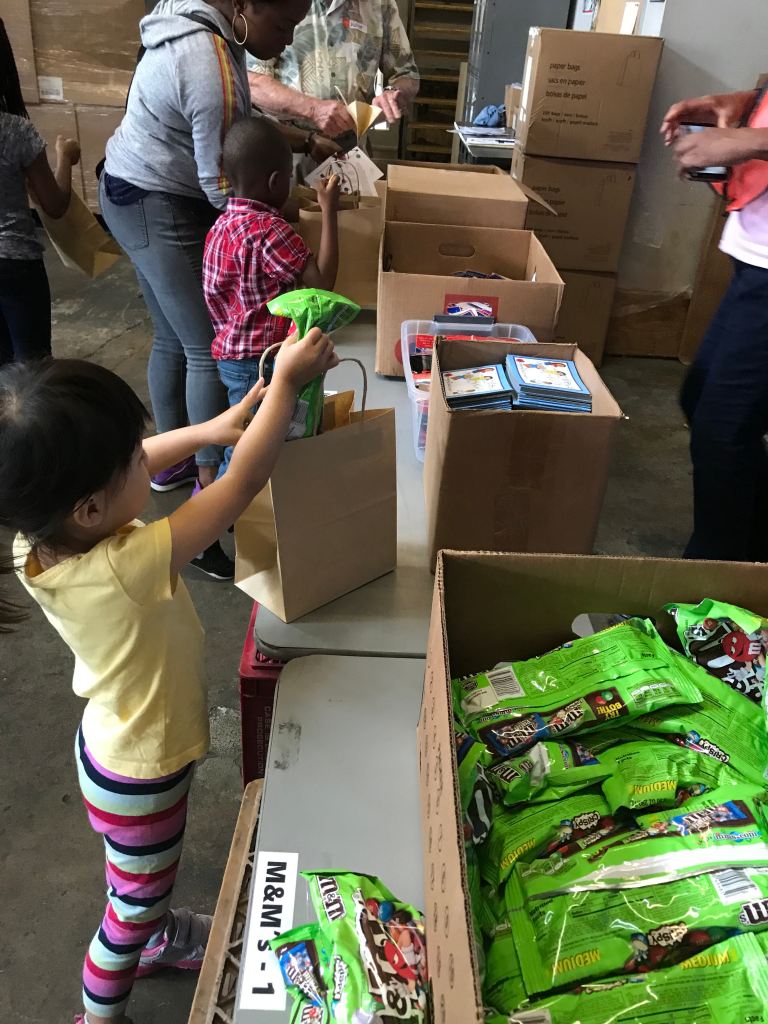
But I thought, this might actually be the perfect fit for a 3-year-old. After all, who wouldn’t be thrilled to be surrounded by piles of colourful chocolates, especially when Elizabeth is a chocolate fan? The task was simple, hands-on, and sensory-rich. It didn’t require much explanation. Clear labels were provided. Kids and parents just needed to pick one of each kind of chocolate and place them into brown paper bags.
Elizabeth was immediately engaged. She loved the sorting, the bagging, and having a clear job to do. It was the kind of repetitive, tactile task that toddlers enjoy, and it gave her a sense of purpose right from the start.
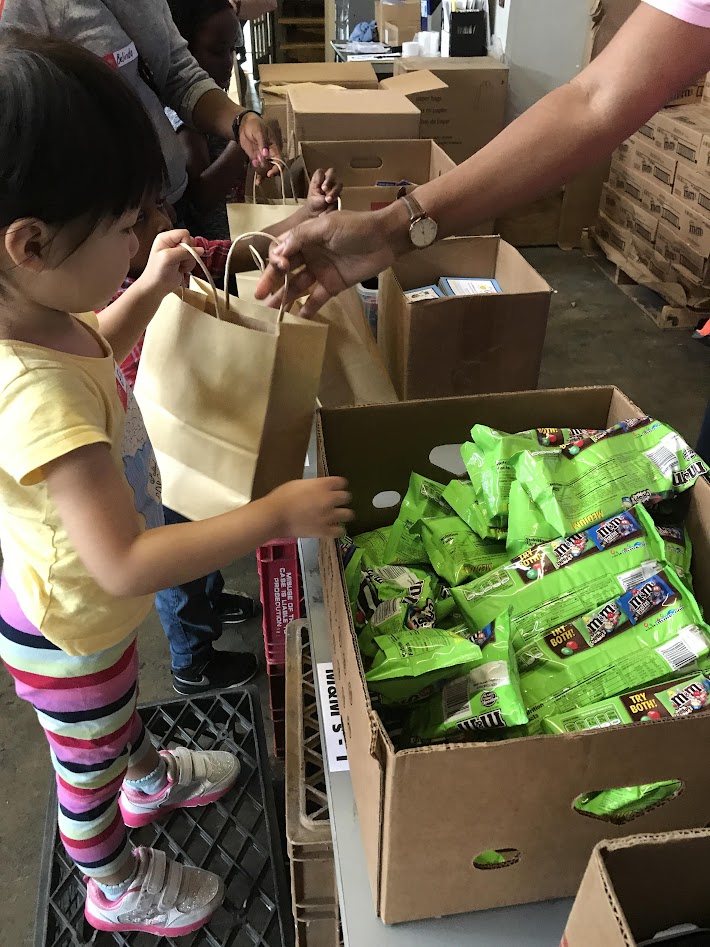
The organiser had thoughtfully provided snacks, water, and little sticker name tags for the kids. To help the younger children reach the tables easily, steady crates were also placed for them to stand on. The name tags helped everyone address the children by name, making them feel truly seen and welcomed. To add to the joyful atmosphere, music played softly in the background, encouraging everyone to sing along as they packed.
Of course, after about an hour, Elizabeth’s energy began to fade (as any preschooler’s would). But this time, the organisers had planned ahead. They had set up a small beading table at the side—a space where children could sit and keep their hands busy while parents continued the packing.
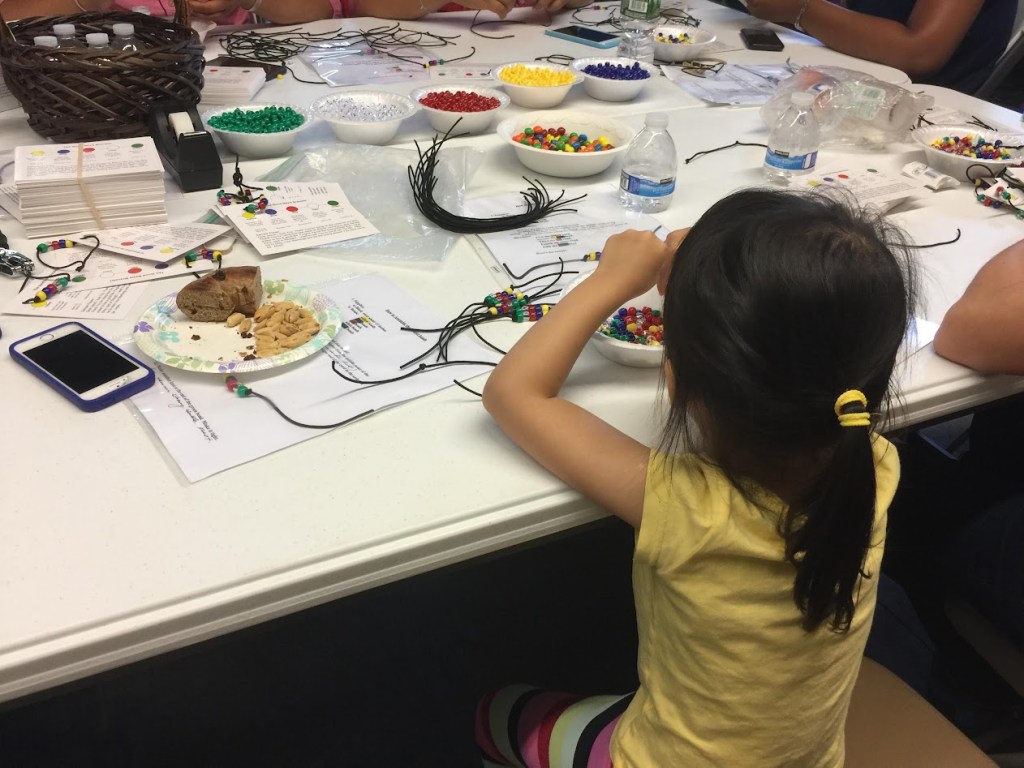
That small, simple setup made a huge difference. Elizabeth happily moved over to string beads, while I was able to stay and help complete the task. The entire experience was smooth and positive, not because it was easier, but because it was designed with the children in mind.
What I Learned: Start with the Activity, Then Build the Connection
Both experiences taught me that volunteering with young children isn’t about grand gestures or forcing them to understand adult causes. It’s about finding an entry point—a simple, hands-on activity that is fun and achievable for their age. Once they are comfortable and engaged, the meaningful moments happen naturally.
That belief is what shapes how we design Smol Boss activities today. We always ask: Is this something a child would enjoy doing? From there, we think about how to align it with meaningful causes.
3 Key Takeaways for Parents Volunteering with Young Children
1. Start with an Activity, Then Let Curiosity Lead
Preschoolers might not fully understand abstract causes at first, but when we provide an age-appropriate, hands-on activity that allows them to be present and engaged, they naturally become curious and start asking questions. These questions open up golden moments for meaningful conversations and deeper understanding, much more effective than explaining everything upfront.
2. Shared Tasks Create Natural Interactions
Crafts, simple games, or even packing gifts can provide a shared focus, easing the awkwardness and making interactions flow more naturally.
3. Thoughtful Planning Makes All the Difference
Volunteering with kids isn’t about making things “child-friendly” in a superficial way. It’s about intentionally setting up opportunities for children to stay engaged and feel useful. A little preparation like a craft corner or child-sized tasks—can turn a simple event into a meaningful one for everyone involved.
 Smol Boss
Leave a comment